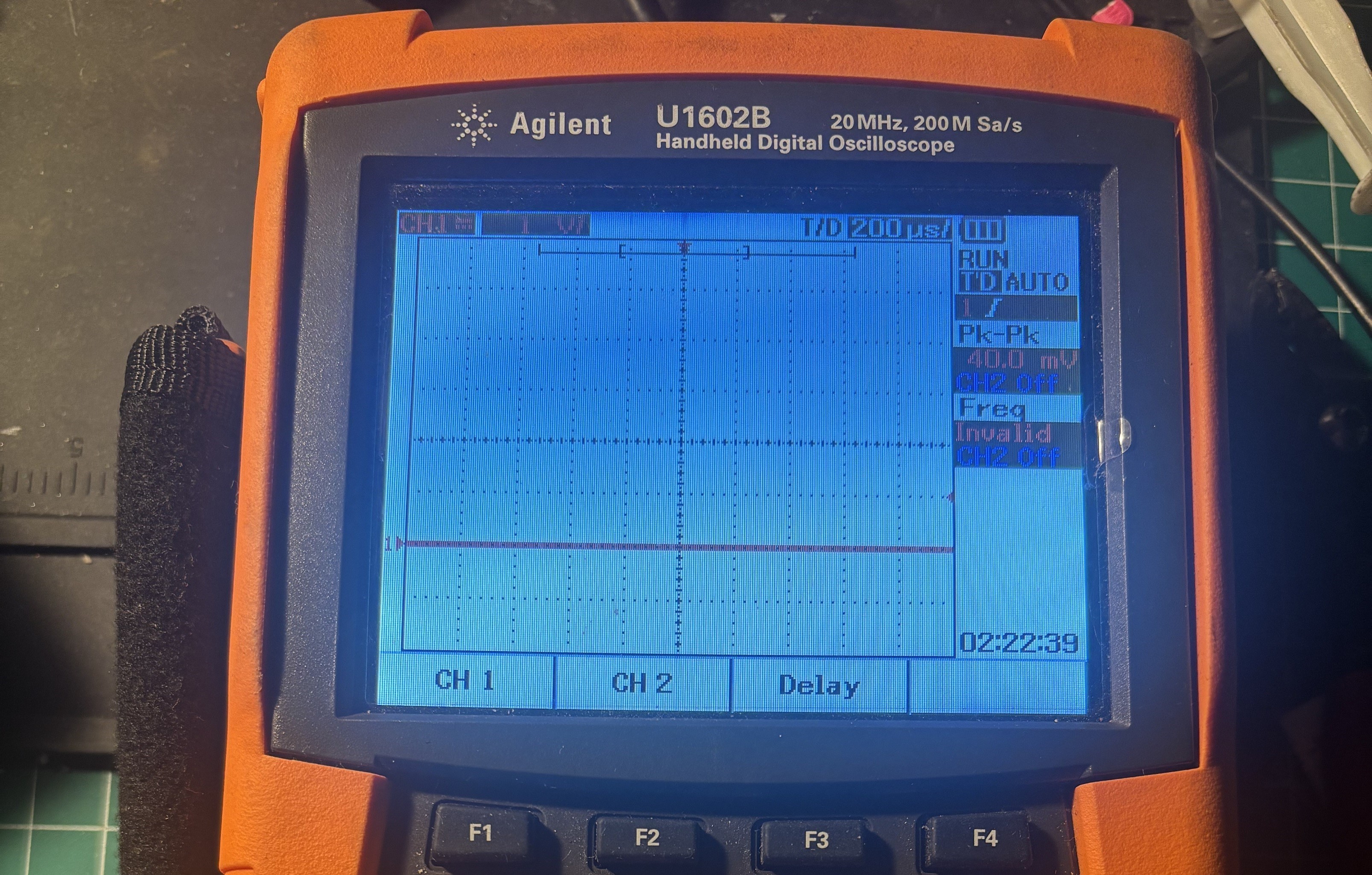
I purchased this Agilent U1602B handheld oscilloscope listed as "for repair" for a significantly discounted price. The seller noted that both channels would intermittently lose signal integrity to varying degrees.
I set up a controlled test of the unit with a clean, comparable reference. I used my Rigol scope's built-in probe compensation signal and a known-good probe to evaluate the waveform on each of the channels. With this setup, I know to expect a noise-free 1 kHz square wave with ~3 volts peak-to-peak.
Based on the sellers description of the issue, I suspected the BNC jack and specifically its solder joints. These jacks are subject to a lot of mechanical stress throughout their lifetime and it is very common for them to need reflow. I hooked up each channel to the test signal and gave the jack a wiggle with varying amounts of pressure to see if this would induce the fault.
As seen in the videos, both channels had issues displaying the waveform. Channel 1 showed very obvious signs of cracked joints as it would jump from perfect to distorted with each movement. Channel 2, however, was consistently noisy with higher peaks on the rising edge of the square wave. Still, a poor connection at the BNC will cause this condition just the same.
A poor connection will effectively create an unwanted RLC circuit on the input signal, allowing common mode noise to linger in the attenuation stage of the circuit, throwing off the signal compensation. This will cause a noisy waveform and overshoot on rising edges - a perfect fit for what was displayed in this test. From here, it was time to tear down the device and get a look at the condition of our BNC jack connections under a microscope.
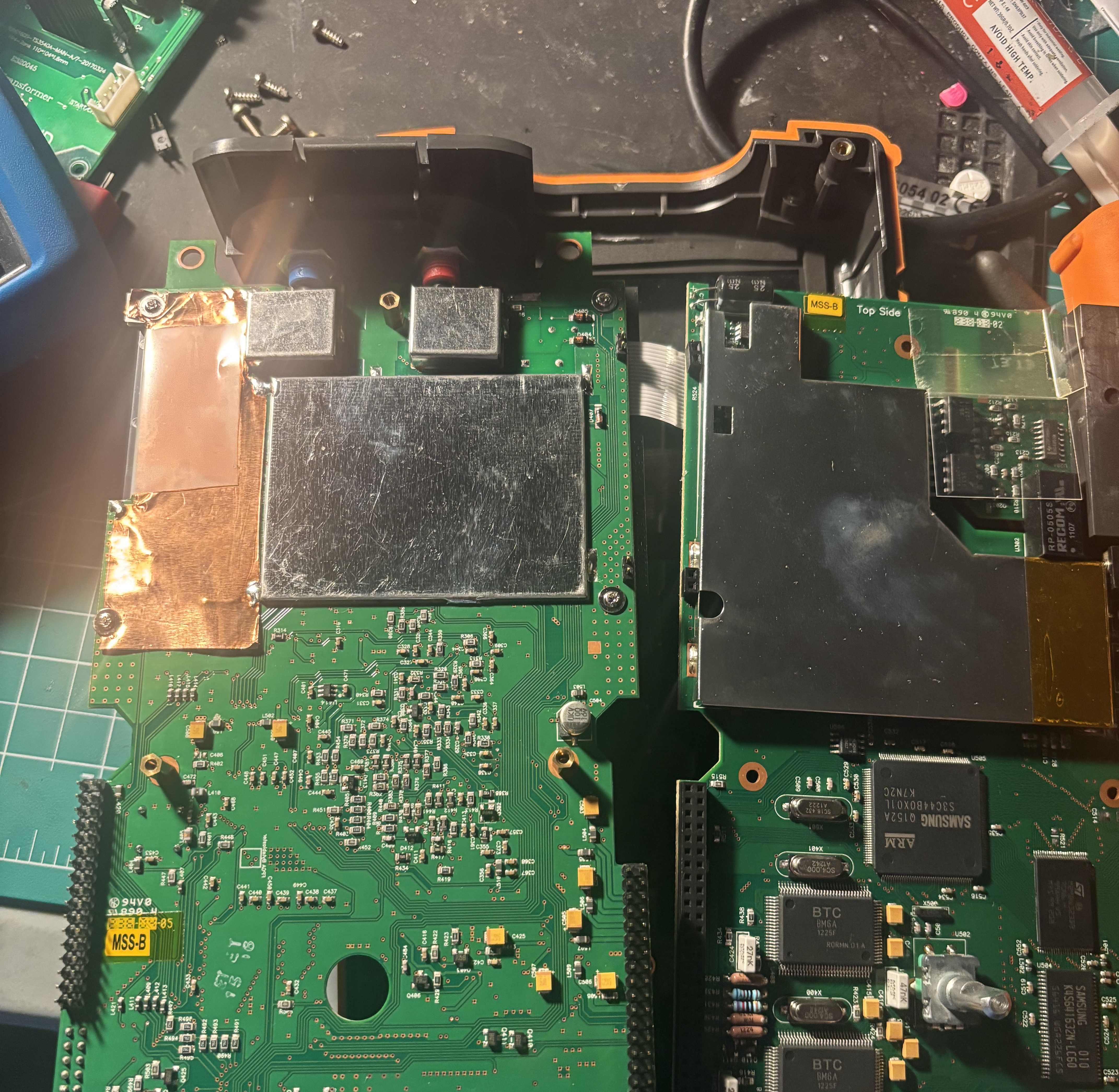
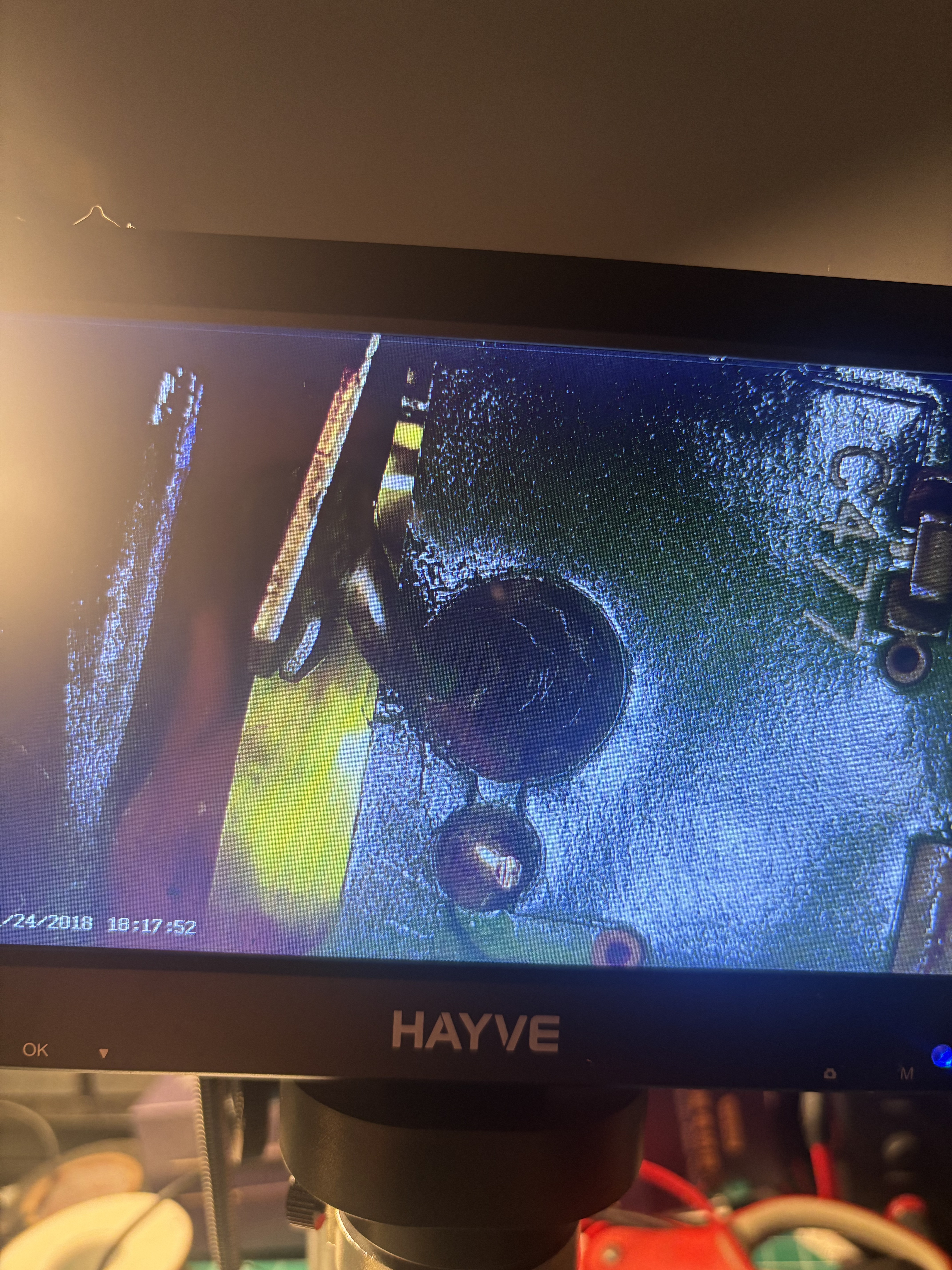
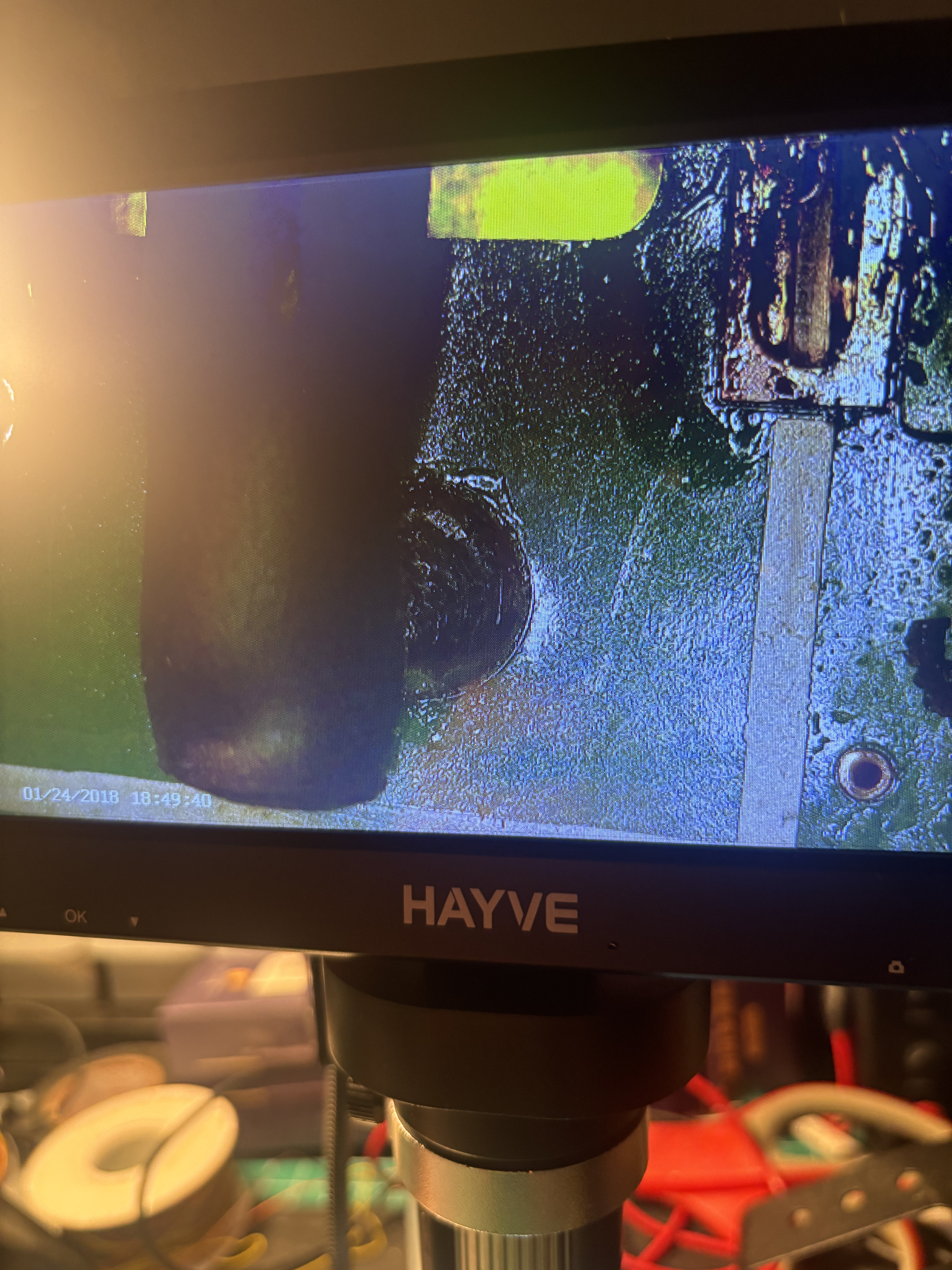
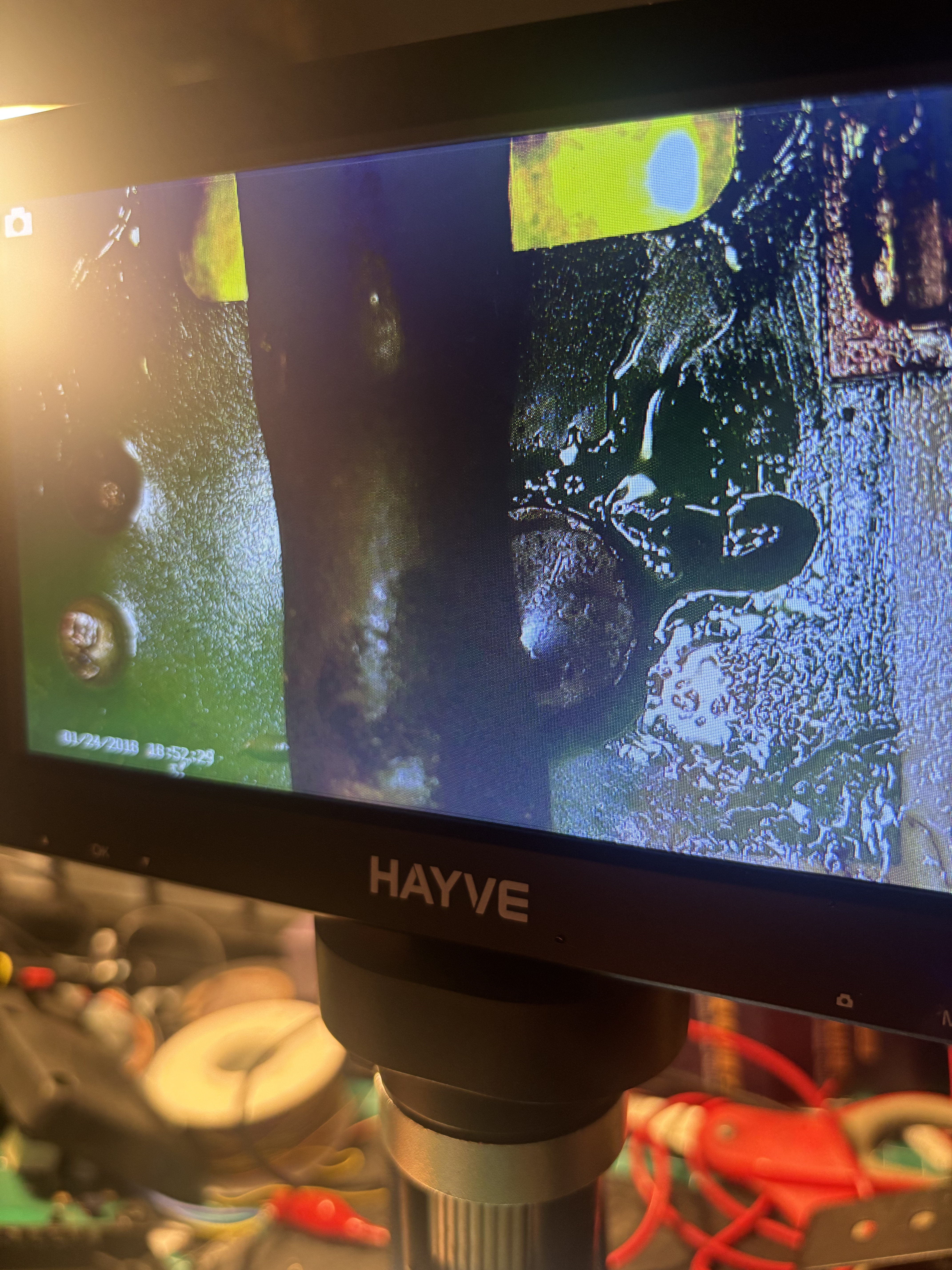
Inspection under a microscope revealed visible cracks on the joints for both channels. With my suspicions verified, I decided to desolder all the joints on the BNC, clean everything, and apply fresh solder. A reflow might have sufficed but I wanted to evaluate the condition of the pads before I reassembled as well.
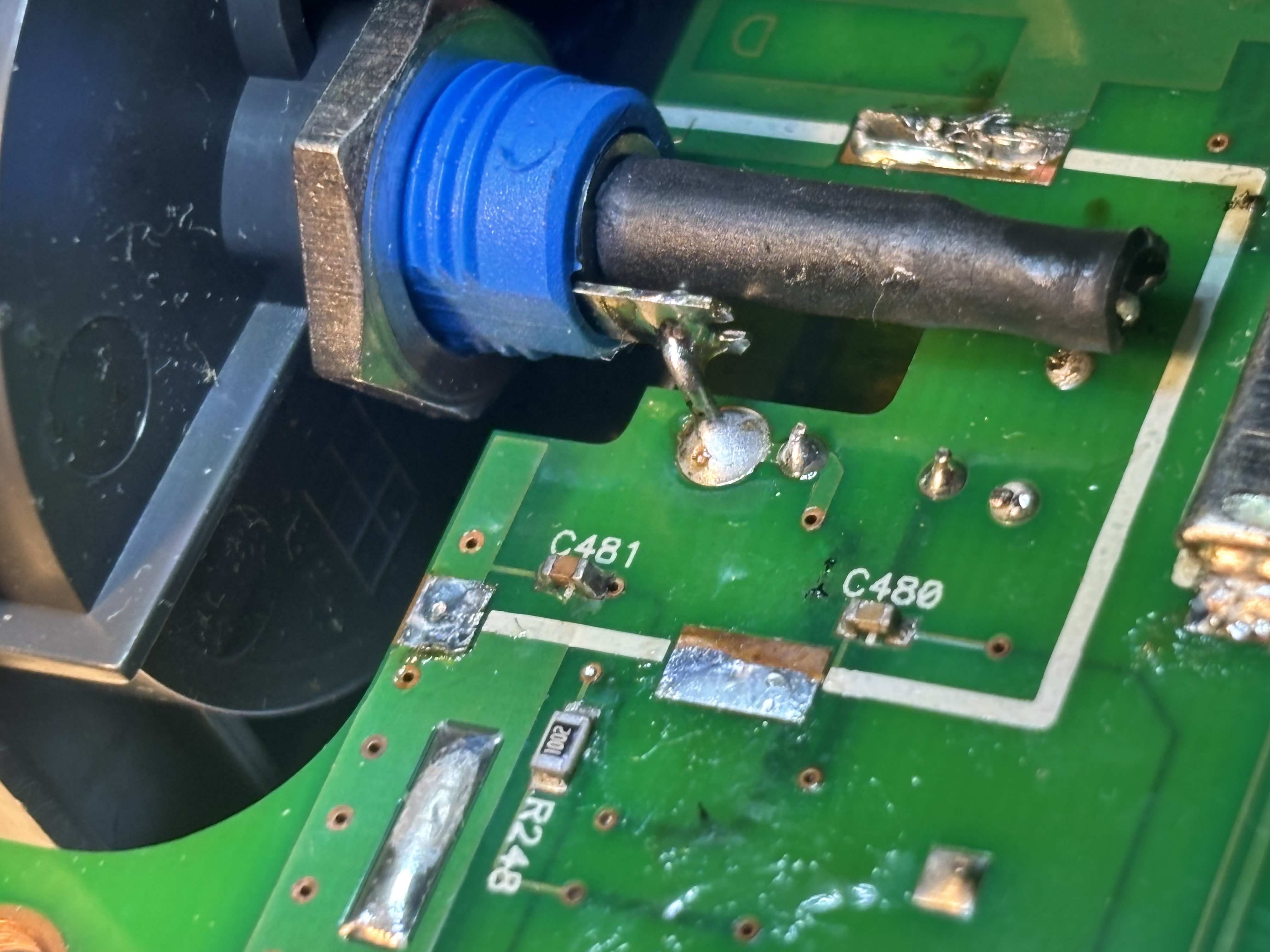
After reassembling, I performed a calibration through the device's built-in software and adjusted the probes to minimize any other factors that may affect signal integrity. From here, I performed the same wiggle test while measuring the 1 kHz square wave from my benchtop scope. Both channels now cleanly display a proper square wave and don't lose integrity with any mechanical stress.